
THE UN OCEAN TREATY ENTERS INTO FORCE – WITHOUT ITALY. GREENPEACE AND BLUE MARINE FOUNDATION CALL ON THE GOVERNMENT TO PROTECT THE SEA.
After years of negotiations, the Global Ocean Treaty entered into force on 17 January. The United Nations agreement aims to protect the high seas – ocean areas beyond national jurisdiction, which make up around 60 per cent of the world’s oceans. Having surpassed the 60 ratifications required to become international law last September, the Treaty is a crucial tool to protect at least 30 per cent of the oceans by 2030 through the establishment of Marine Protected Areas (MPAs).
To date, 81 countries have ratified the Treaty, including France, China, Cuba and Greece, among others. Italy, however, is not among them. In Italy, discussions are still far from leading to ratification, with repeated institutional delays and responsibility-shifting – a pattern already seen with other international agreements for marine protection that have never been ratified.
“We are still a long way from the goal of protecting at least 30 per cent of Italian waters by 2030,” said Valentina Di Miccoli, Head of the Oceans Campaign at Greenpeace Italy. “Marine Protected Areas in Italy are few, small and cover only a negligible portion of the sea. Supporting their conservation and expansion projects is essential to curb pollution and overexploitation in the Mediterranean. It is time to change course and ratify the Global Ocean Treaty in Italy as soon as possible.”
The protection of Italian seas is in a critical state, with less than 1 per cent of marine waters effectively protected by conservation measures. To help increase this percentage and contribute to the conservation of marine habitats, Blue Marine Foundation and Greenpeace Italy launched the “AMPower” Project one year ago. The initiative supports Italian Marine Protected Areas in processes of expansion, rezoning, and effective management of Natura 2000 sites, which are often protected only on paper.
Greenpeace and Blue Marine Foundation act as direct interlocutors between MPAs, the Ministry of the Environment and ISPRA, promoting shared and effective management of the sea and its resources, and proposing concrete solutions that balance marine habitat conservation with sustainable use by local communities.
MPAs face multiple challenges, including fragmented and often inadequate management, complex legal and administrative frameworks, staff shortages, lack of funding and surveillance, and insufficient regulation of over-tourism. The situation is even more critical for marine Sites of Community Importance (SCIs) within the EU Natura 2000 network, which are managed by regional authorities and often lack effective governance systems and protection measures against high-impact activities such as bottom trawling.
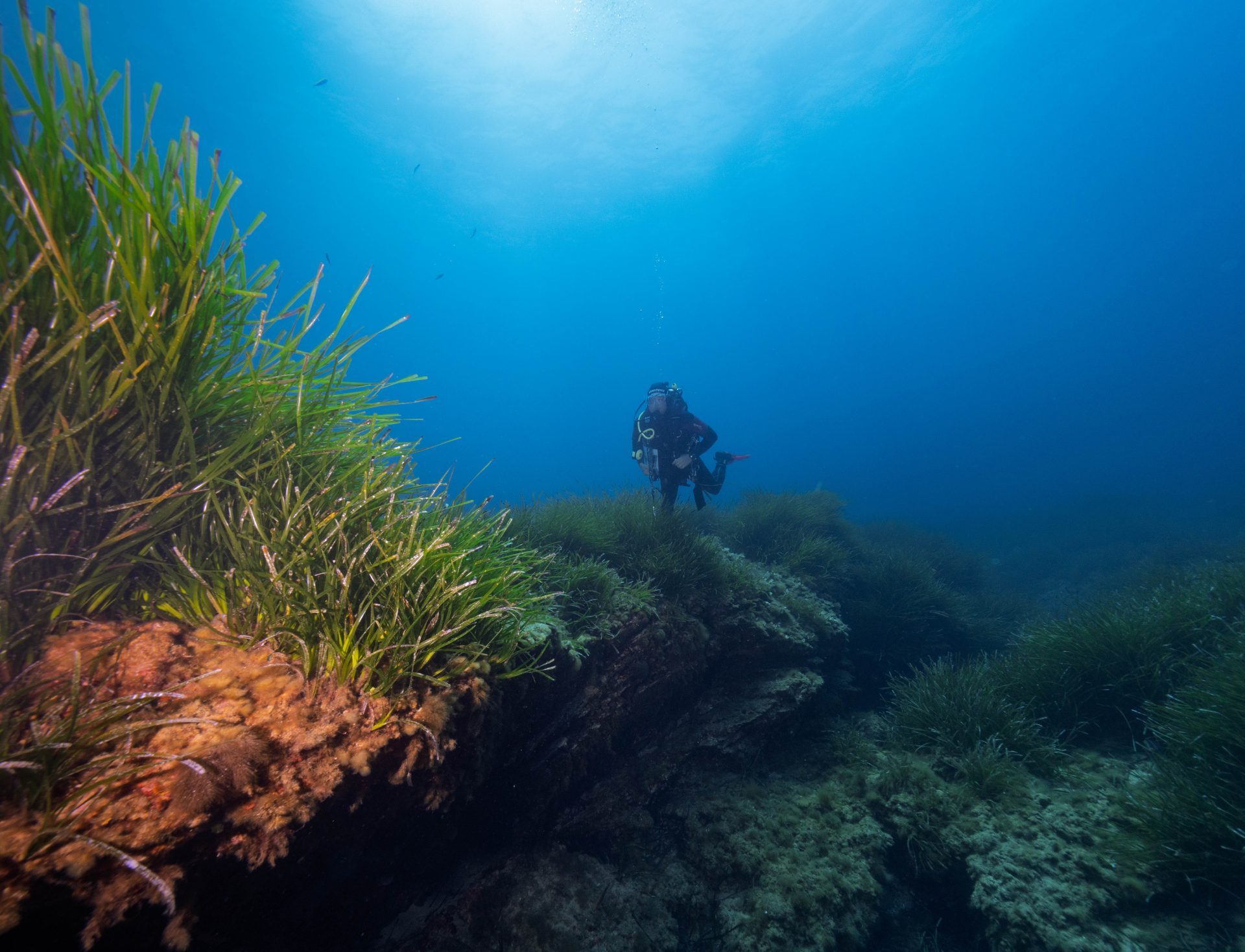
The project has already carried out scientific monitoring in the Argentiera SCI (Sardinia) and the Torre Guaceto MPA (Apulia), in collaboration with the DISTAV Department of the University of Genoa, focusing on the health of coralligenous habitats and Posidonia oceanica seagrass meadows. Results show generally good health, but also clear signs of human impact, mainly linked to fishing activities.
At the Asinara MPA headquarters, a multi-stakeholder meeting was also organised to define appropriate mitigation measures for the protection of the Argentiera SCI, an area of high biodiversity. Additionally, Torre Guaceto MPA has proposed a new zoning plan that includes new fully protected (Zone A) and highly protected (Zone B+) areas, increasing the overall level of protection within the MPA.