
Six years after Brexit promises to end overfishing and restore fish stocks, nearly 60 per cent of UK catch limits are still set above scientific advice, fuelling the collapse of key fish stocks.
The government’s own scientists have confirmed that six years on from the post Brexit Fisheries Act, which was sold as a moment to deliver “world-class fisheries management,” the UK has continued to ignore scientific advice, setting 58 per cent of fishing catch limits at unsustainable levels. Alarmingly, similar proportions have exceeded scientific recommendations every year since Brexit. Despite a change of government and repeated commitments to prioritise nature recovery, this ongoing disregard for the very scientific evidence the government itself commissions, is a glaring contradiction and entirely indefensible. Rather than a fresh start or the political will to improve fisheries management, the UK has delivered more of the same, with further depleted stocks and a failure to protect the future of our seas.
Leaving the European Union was sold to the British public as a turning point for the UK’s seas. “Taking back control” of our fisheries was meant to deliver a new era of sustainable fisheries management, a healthier ocean and revitalised coastal communities, with the UK committing to follow scientific advice and rebuild depleted stocks through its own Fisheries Act. Yet today those promises ring hollow.
Each year, ministers set Total Allowable Catches (TACs) for commercial fish stocks. These catch limits are meant to be guided by the “best available science” from the International Council for the Exploration of the Sea (ICES), the intergovernmental marine science body that advises on sustainable catch levels to ensure fish populations can continue to reproduce and thrive. Yet year after year, the UK continues to ignore this advice, knowingly undermining the recovery of fish populations and the long-term future of the fishing industry in favour of short-term expediency, political bargaining, trade-offs, and economic gain, all of which are driving the collapse of key species.
Cod remains the most striking example of the UK’s ongoing fisheries failure. Once a staple of British cuisine and culture, cod populations have been so badly managed that nearly all stocks are now severely depleted, a fact many consumers do not realise. Most people assume the cod on their plate comes from local waters, but an increasing proportion is now imported from Arctic regions and neighbouring countries. This disconnect is a major problem because consumers rarely experience the direct consequences of overfishing, as alternative fishing grounds mask the decline of local populations. Over the last decade, the Celtic Sea cod population has crashed by an unforgivable 96 per cent. Rather than implementing urgent recovery measures, the TAC set by government continues to permit catches equivalent to nearly the entire remaining adult population. This is another clear contradiction given that the government claims to be committed to rebuilding fish stocks. You cannot restore a population by removing the very fish needed to reproduce it.
Celtic Sea cod is not an isolated case. In the past two years, the situation has worsened further, with Northern Shelf cod, Irish Sea herring and Celtic Sea haddock now receiving “zero catch advice” from ICES. They join other stocks of cod, whiting and herring on a growing list that are so depleted that scientists recommend they should not be targeted at all. ICES only issues such advice when a population is in a truly dire state. These warnings are meant to trigger urgent action, yet they are too often met with delay, excuses, and inaction.
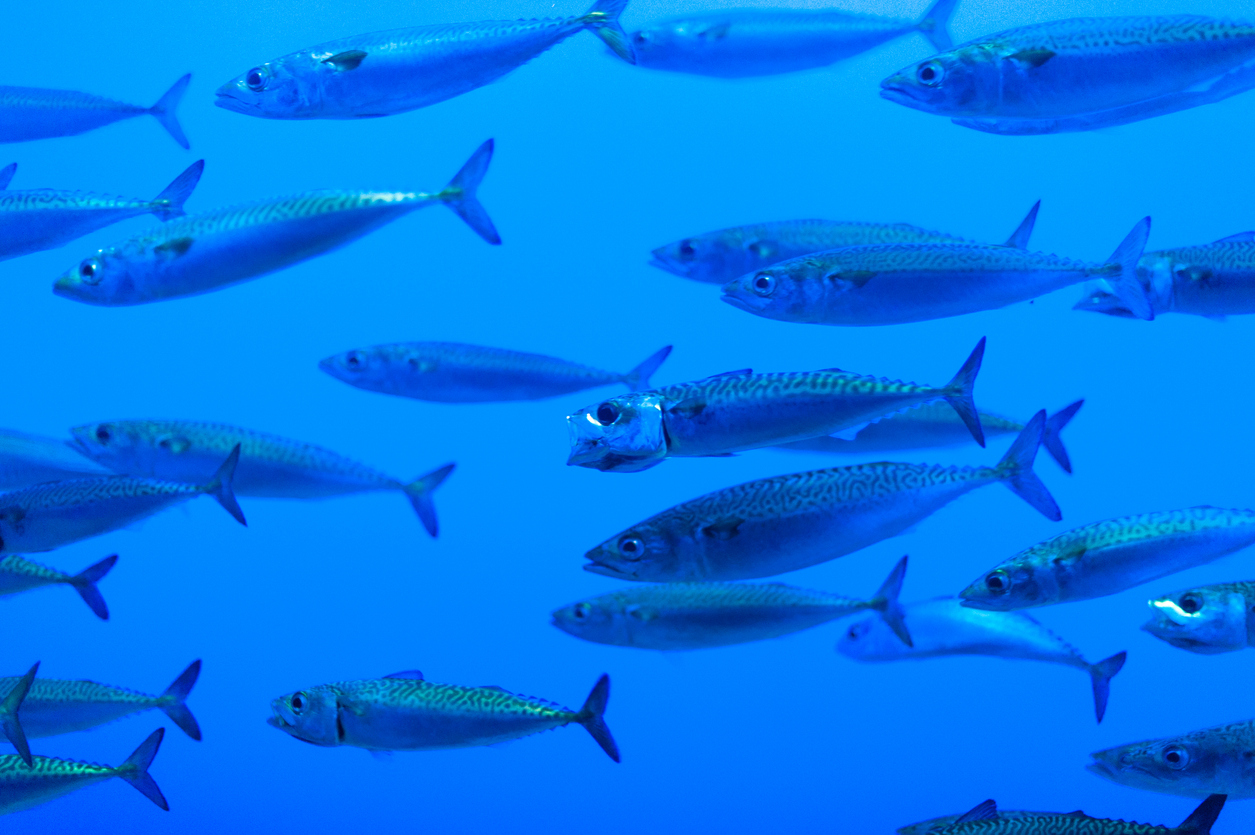
Mackerel populations have also suffered alarming declines, with numbers around UK waters falling by roughly 76 per cent over the past decade. Despite repeated scientific warnings and ICES advising this year that catches should be reduced by 77 per cent, coastal states continue to set catch limits above sustainable levels, even for one of Europe’s largest fisheries. The absence of a sharing arrangement means overfishing persists, putting further pressure on the only mackerel stock, undermining efforts to rebuild it. Like cod, mackerel are a crucial part of the marine food web, and their decline has cascading effects on other fish, seabirds and marine mammals.
Even the government’s much-touted Fisheries Management Plans (FMPs), required under post-Brexit legislation to rebuild depleted stocks, prevent overfishing, and secure long-term sustainable fisheries, continue to follow the same failing approach. They lack effective, enforceable measures capable of genuinely restoring fish populations. We are stuck in an endless loop of doing the same thing over and over again and expecting different results.
The pattern is painfully clear. When scientific advice is followed, fish populations recover. When it is ignored, they decline. At a time when our ocean faces multiple environmental pressures, including climate change, pollution, and plastics, overfishing remains the single greatest threat to marine life and ocean health. Yet it is also the threat we have the greatest ability to manage effectively. The choices we make today will determine the fish populations we have tomorrow and in the decades to come. If the government does not change course by prioritising the recovery of depleted stocks and managing the fish we still have sustainably, it is almost certain that future generations will inherit drastically diminished populations.
The UK has the knowledge, the legal framework, and the opportunity for genuine fisheries reform. What is missing is the political will to put the health of the ocean ahead of short-term expediency. Until that changes, it doesn’t seem to matter who occupies Downing Street, the same disregard for the marine environment continues, the statistic will remain the same, and so will the decline of our vital public asset: our wild fish resources.
Blue Marine is urging the UK Fisheries Minister, Angela Eagle, to set catch limits in line with scientific advice for 2027 onwards and take decisive action to end the current overfishing crisis in UK waters.
Jonny Hughes, Blue Marine’s Fisheries Policy Lead: “It is beyond shocking that the UK government continues to treat the marine environment as an afterthought. They have had countless opportunities to improve the sustainability of our fisheries, yet they repeatedly choose inaction. At this point, it is impossible to view this as anything other than a deliberate decision, particularly when their much-touted fisheries management plans fail to include the essential tools needed to deliver effective management in practice. Their annual decisions to set catch limits above sustainable levels are not a responsible attempt to balance competing interests; they are a deliberate sacrifice of the marine environment, the long-term future of vital fish stocks around the UK coast, and the livelihoods of the small-scale fishing industry, all for the sake of short-term political gain. Pandering and playing politics with a national asset is reckless, shameful, and an unforgivable failure of leadership. Scientists, conservationists and many inshore fishermen have long warned that current management approaches are failing to halt the decline of critical species. Despite this, the government has repeatedly resisted necessary sustainability measures. We are not just mismanaging our seas anymore, we are quite literally fishing our future away.”
| Year | % of TACs in line with scientific advice | % of TACs set above scientific advice | |
| 2020 | 34% | 66% | |
| 2021 | 34% | 66% | |
| 2022 | 35% | 65% | |
| 2023 | 40% | 60% | |
| 2024 | 46% | 54% | |
| 2025 | 46% | 54% | |
| 2026 | 42% | 58% | |