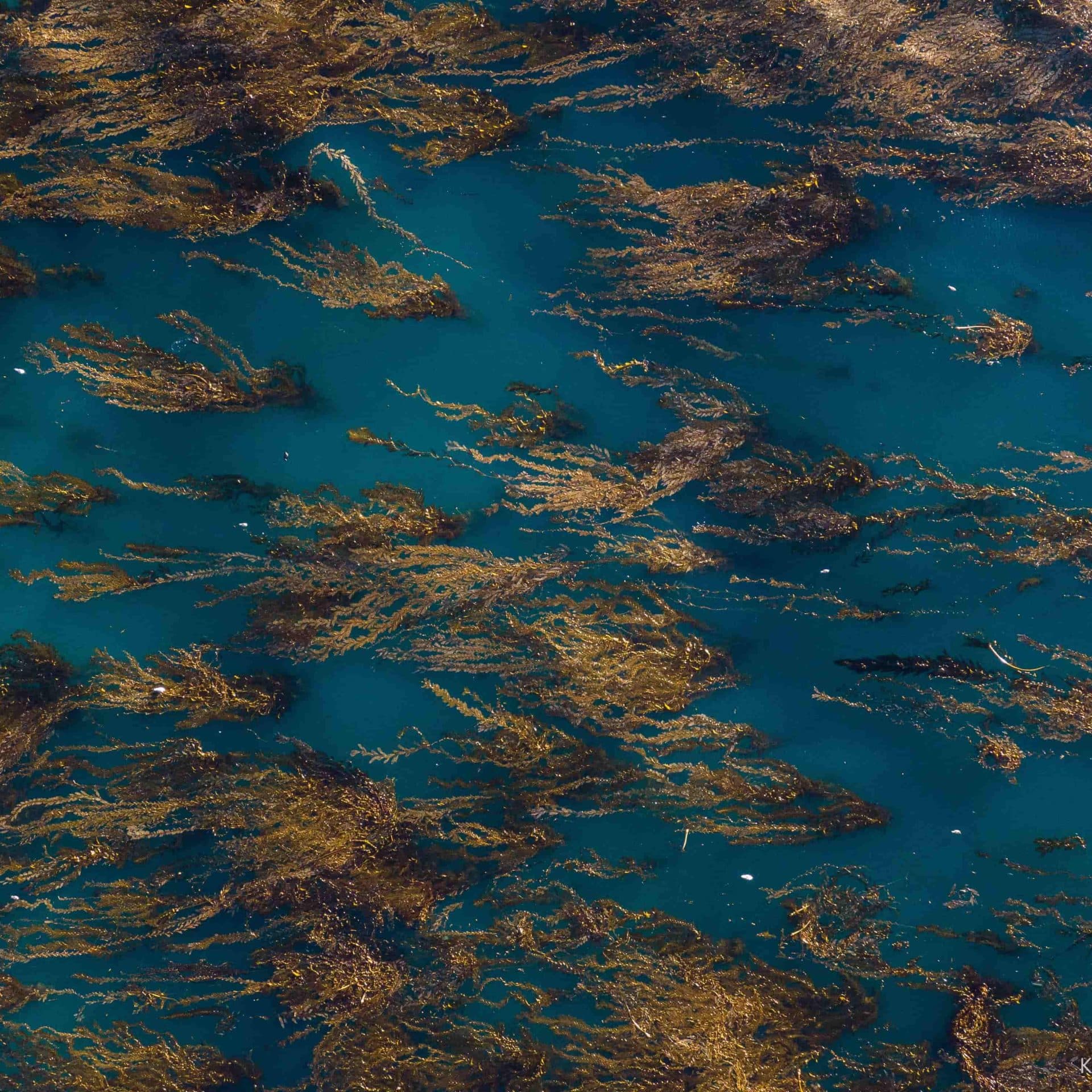
In this report we focus on seascape habitats found in the UK: mudflat, salt marsh, oyster reef, seagrass meadows and kelp forest. Our aim is to summarise the goods and benefits that these habitats deliver and gather the available evidence to provide better understanding of how they interact. We see this as the starting point of a journey towards seascape scale, multi-habitat restoration in the UK.
The concept of landscape ecology and its application to terrestrial restoration has been well established since the 1990s. Seascape ecology is the more recent application of landscape ecology to the marine environment, defined as ‘the study of the causes and ecological consequences of spatial and temporal patterning on marine systems’ (Pittman et al., 2011). At the heart of these landscape and seascape approaches is the recognition that life on earth is supported by a variety of different habitats and the connections between them. Referred to as ‘ecological connectivity’, this is a central theme of the seascape approach and essential to planetary and human wellbeing.