Since the adoption of the Kunming-Montreal Global Biodiversity Framework in 2022, an international agreement to reverse biodiversity loss by 2030, there has been a rapid mobilisation of effort aiming to achieve 23 ambitious targets. This includes the “30×30” target to conserve 30 per cent of land and ocean by 2030. However, significant progress is needed with currently only eight per cent of the ocean under some form of protection.
Marine protected area (MPA) creation and management have been identified as a crucial tool in helping marine ecosystems adapt to some of the impacts of climate change, such as acidification, sea-level rise, species distribution shifts and oxygen availability. We must secure effective protection as conservation benefits are likely to be the greatest in fully protected areas, where all destructive and extractive activities are removed.
Considering the immense impact of climate change on the ocean, we need to consider strategies to ‘future-proof’ our efforts to achieve the 30×30 target. Our latest report, ‘Navigating change. The role of Climate-smart MPAs in achieving 30×30’, developed with Plymouth Marine Laboratory and supported by the Marine Conservation Institute, UBC Institute of Oceans and Fisheries, the Global Ocean trust and the University of the Western Philippines, explores how climate-smart MPAs can be designed and implemented and how existing MPAs can help buffer the worst effects of climate change.
The report covers three main sections:
- The latest supporting science and research which demonstrate how climate change, including marine heatwaves, is impacting ecosystems and species in numerous ways, such as changing migratory patterns.
- It demonstrates that climate change mitigation, adaptation and resilience must be integrated into the design, placement and financing of MPAs to ensure they are ‘future-proof’ and capable of delivering lasting conservation benefits.
- It emphasises the importance of securing sustainable funding and working with local communities to achieve effective management. It also explores how these principles can be applied to the High Seas.
Climate-smart MPAs are ocean-regions designated and managed to deliver conservation goals while considering the distribution and resilience of species and habitats in changing ocean conditions – that build upon the proven benefits of existing protected areas. They achieve this by safeguarding climate-resilient habitats and regions from human interference and adopting certain strategies such as allowing for flexible boundaries to accommodate climate-driven shifts in species distributions.
Integrating strategies that consider both current and future climate impacts into MPA planning, design and implementation will strengthen ecosystem resilience and better prepare us for changes in the marine environment. These approaches go hand in hand with the myriad of benefits MPAs already provide.
As we look ahead to the United Nations Ocean Conference, which is less than six weeks away, strong political will and a show of strength is vital if the world is to correct course and deliver on the global goals agreed upon. Climate-smart MPAs are just one of the many ocean solutions that can help deliver the 30×30 target and the goals of the High Seas Treaty. Their ability to be ‘future-proofed’ – designed with foresight to consider shifting distribution and evolving conditions can help promote the 30×30 effort and act as an impetus for rapid, ambitious action for protecting our ocean.
“The ocean is at the frontline of climate change. As we reach the halfway point to 2030 we still have a long way to go to reach the final target. Climate-smart marine protected areas are a vital solution—designed not just for today’s challenges, but for tomorrow’s changing conditions. If we are serious about reversing biodiversity loss and building ocean resilience, we must invest in MPAs that are dynamic, science-led and inclusive of local communities.” Maddie Millington-Drake, Senior Climate Project Manager, Blue Marine Foundation
Prof. Ana Queiros, Marine and climate change ecologist from Plymouth Marine Laboratory, said: ‘It is essential that we design conservation measures that can stand up to the challenges of climate change, that help ocean wildlife and habitats adapt to its effects, and ensure the ocean can continue to help regulate the climate’.
Read the Blue Marine Foundation report here.
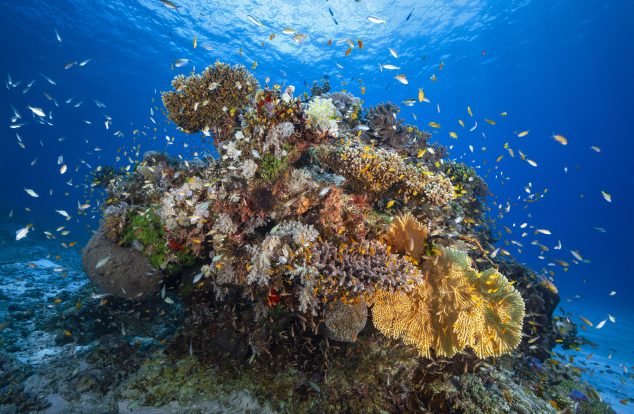
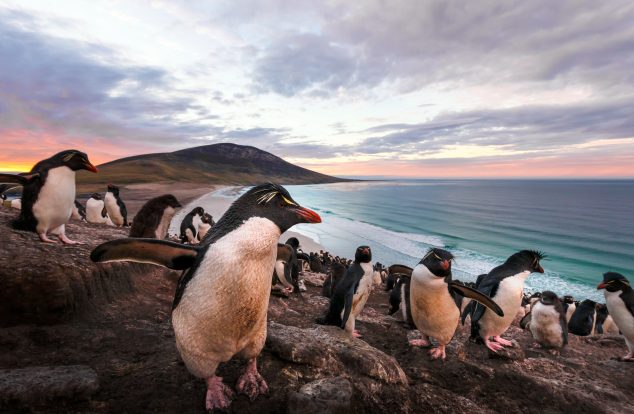
Photo Credit: Stefan Andrews / Ocean Image Bank