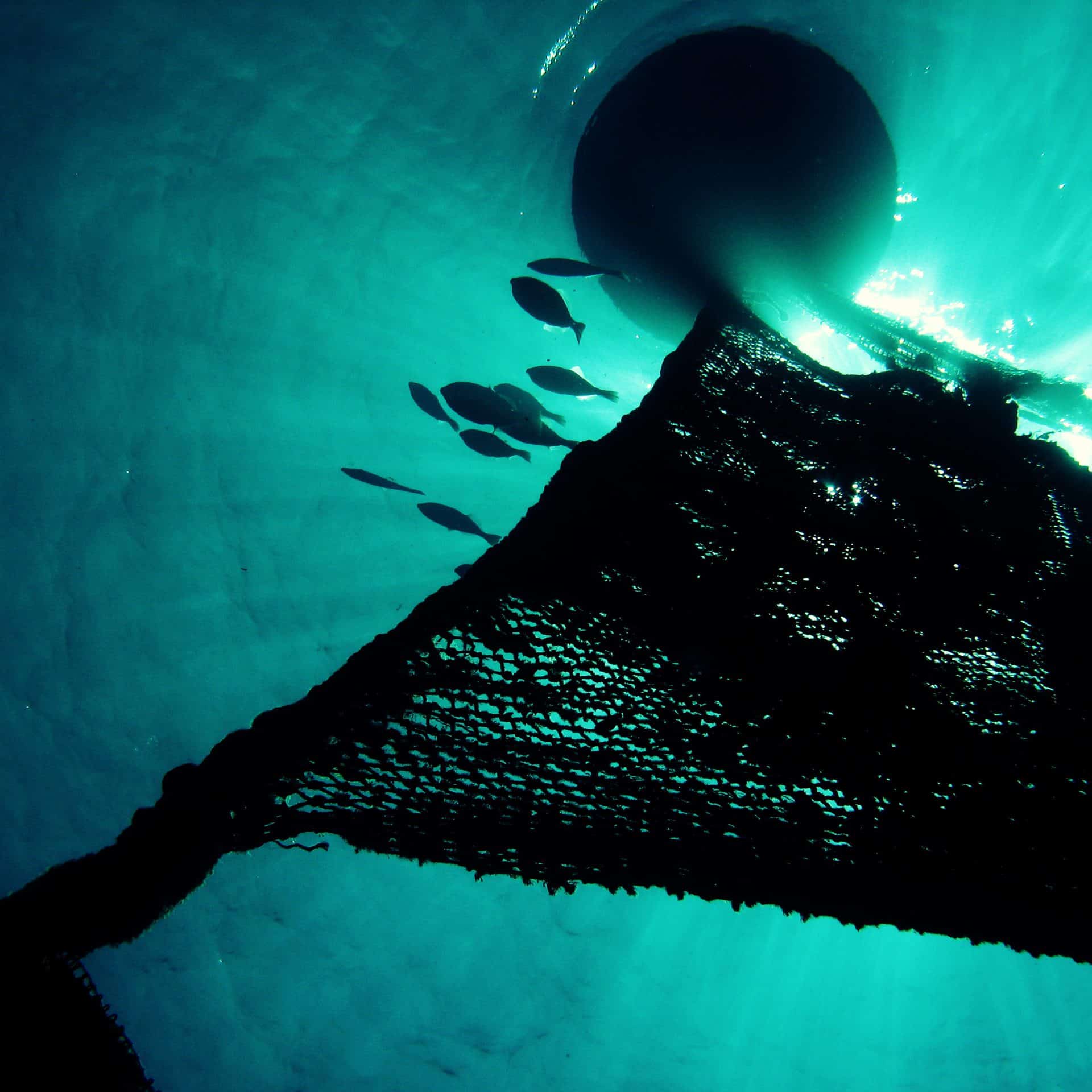
Blue Marine is working to combat the harmful impacts of drifting fish aggregating devices (FADs) which are deployed at sea by industrial purse seine vessels to catch millions of tunas.
These drifting FADs, which typically consist of a floating raft, a submerged “tail” and a satellite buoy that allows fishing vessels to track them from afar, are lost or discarded in their thousands, resulting in pollution and damage to sensitive marine habitats. Countless non-target species like sharks and turtles also fall victim to drifting FADs, either as bycatch or through entanglement. Worse still, FADs facilitate the capture of millions of juvenile tunas, with 97% of Indian Ocean yellowfin tuna caught around drifting FADs found to be juveniles.
In 2021, Blue Marine hosted an in-depth webinar on drifting FADs in tuna fisheries, bringing together industry, scientists and NGOs to discuss solutions to the issues caused by these harmful devices. Blue Marine produced a short campaign film to raise awareness on the impacts of FADs on Indian Ocean tuna stocks in advance of the 2023 meeting of the Indian Ocean Tuna Commission (IOTC).
Blue Marine’s campaign film was seen nearly 18 million times, with 11 million of the views coming from India and more than 6 million from coastal states.
Spanish and French-owned industrial purse seine fleets rely heavily on the use of harmful drifting FADs to make their catch and allow them to drift freely around the ocean for months – often through marine protected areas and the exclusive economic zones of other countries.
An improved management measure for drifting FADs was successfully secured in 2023 and put in place a ban on the use of drifting FADs for a 72-day period each year, giving tuna stocks a chance to recover. However, despite the EU supporting similar measures in other oceans where its fleet does not fish as much, it objected to the new measure in the Indian Ocean, making the Spanish and French tuna fleets exempt.
Blue Investigations subsequently partnered with French non-profit BLOOM to take legal action against the European Commission for this objection, as we believed it to be in breach of EU law, and in particular the precautionary principle. In February 2025 the case was heard at the European Court of Justice in Luxembourg.
Five months later, in July 2025, the court ruled in favour of Blue Marine and BLOOM’s challenge. A landmark decision that marks a major step forward for ocean protection, the result means that the European Commission must now review its decision to block the measure aimed at protecting the Indian Ocean from FADs.
The case also has wider implications for NGOs seeking access to justice, and highlights the importance of holding EU institutions to account when they fail to follow their own environmental laws.
CIRCULAR TO UK RETAILERS SELLING CANNED TUNA