Dinosaur fish on the brink of extinction
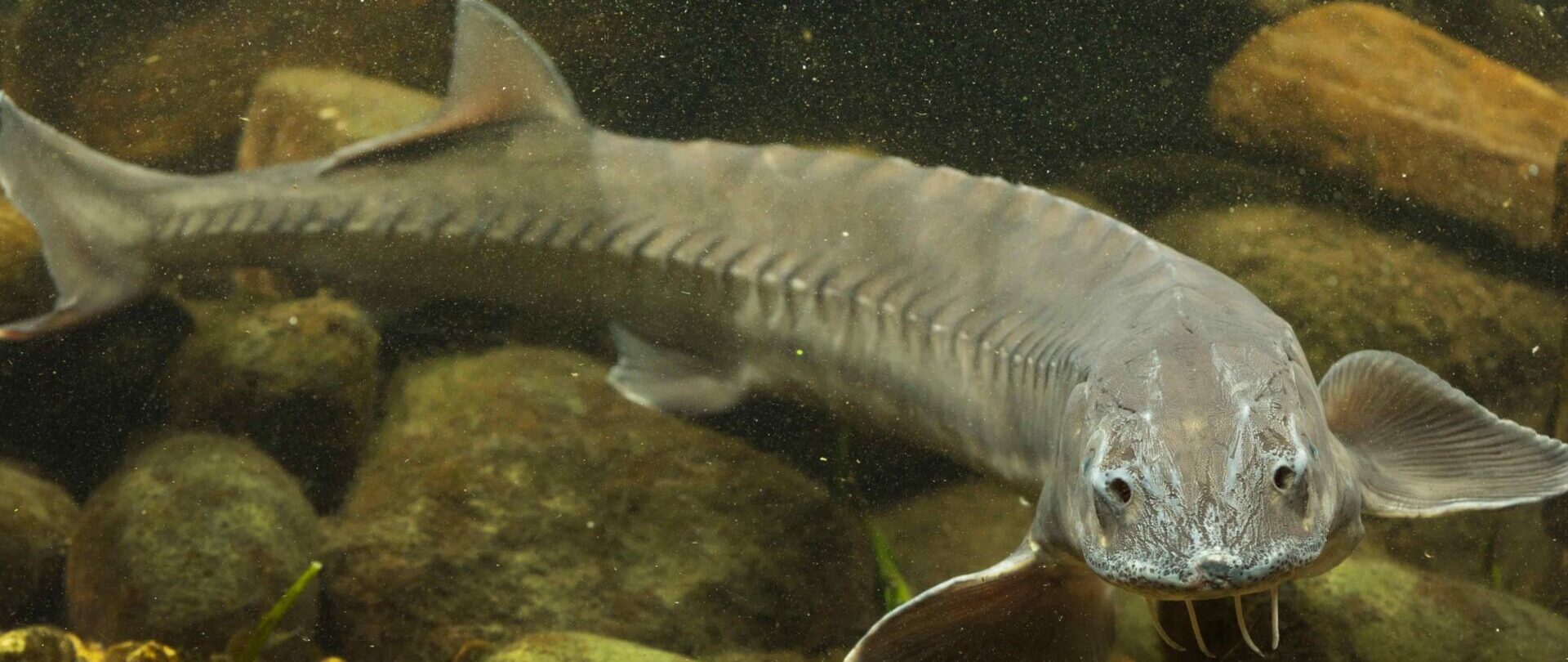
According to the International Union for Conservation of Nature, sturgeon are the most critically endangered group of species in the world. Of the 27 species that belong to the family Acipenseridae, most are classified as critically endangered, endangered or threatened.
Blue Marine has been working since 2020 to restore and protect the European sturgeon (Acipenser sturio), as well as its close relative, the near-threatened Atlantic sturgeon (Acipenser oxyrinchus).
These ancient species date from the time of the dinosaurs, around 200 million years ago, and remain mostly unevolved. They have survived at least two mass extinction events and more than a dozen ice-ages, but due to over-exploitation, habitat degradation and pollution, they are now at risk of extinction.
The aim of the Save The Sturgeon campaign (https://www.savethesturgeon.com/) is to restore populations of both native species of sturgeon as flagship species for healthy marine, estuary and freshwater systems. Our aim is for this to contribute to their recovery across Europe, and underline their wider importance in society. We want the UK to be proud of these gentle giants and encourage their return.
Created in 2020, the UK Sturgeon Alliance is a coalition of organisations that work together to help restore the country’s native sturgeon species. As well as Blue Marine, its members include Zoological Society of London, Institute of Fisheries Management, Severn Rivers Trust, and Nature at Work.
Launched in 2022, Blue Marine’s #SaveTheSturgeon campaign was designed to raise awareness of the fish and the work of the Alliance. Awareness and education are key components of successful restoration. Through the Save The Sturgeon website, anglers, fishermen, and the general public can report sightings of the fish to support restoration and research.
Sturgeon are crucial for river and estuary ecosystems because they feed on dead fish and invertebrates, naturally cleaning the environment and contributing to healthy ecosystems. They have transboundary life histories, so effective conservation must be a collaborative approach with other former range states. This has led to the development of the Pan-European Sturgeon Action Plan.
Sturgeon restoration is not a quick fix, but it is possible. The fish are now returning to rivers in France and Germany after many years of restoration efforts. Through conservation effort, native sturgeon could return to the UK in the not-too-distant future.