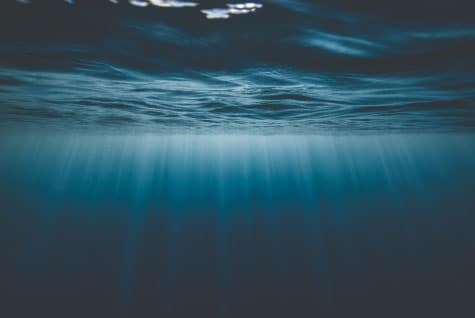
The above sentiment is certainly true of the ocean. Powerful and complex, the ocean dominates the Earth’s global processes and supports life from the majestic to the bizarre. Most people, however, from their land-bound perspective, see the sea only as a playground backed by a vast expanse of featureless water. But the ocean has three-dimensions and holds 97% of the liveable space on the planet. What lies beneath deserves greater recognition and respect. The ocean’s three dimensions are structured. While some creatures criss-cross different depth zones, particularly deep-diving predators like whales and tuna, most life is specialised to live in particular layers. The twilight zone, between 200 m and 1,000 m, is a place where little sunlight penetrates. It is one of the least understood places on the planet because it is so vast and difficult to study. The creatures glimpsed there stretch the bounds between reality and fantasy. Nonetheless, it could be one of the most important parts of the global ocean for life on Earth and human wellbeing.

Scotland’s Seas: An Environmental and Economic Opportunity
Scotland’s seas are six times larger than our land area and among the most ecologically important in the world. They support internationally important marine wildlife, globally significant ecosystems and the coastal economies that depend upon them.
16 September 2026