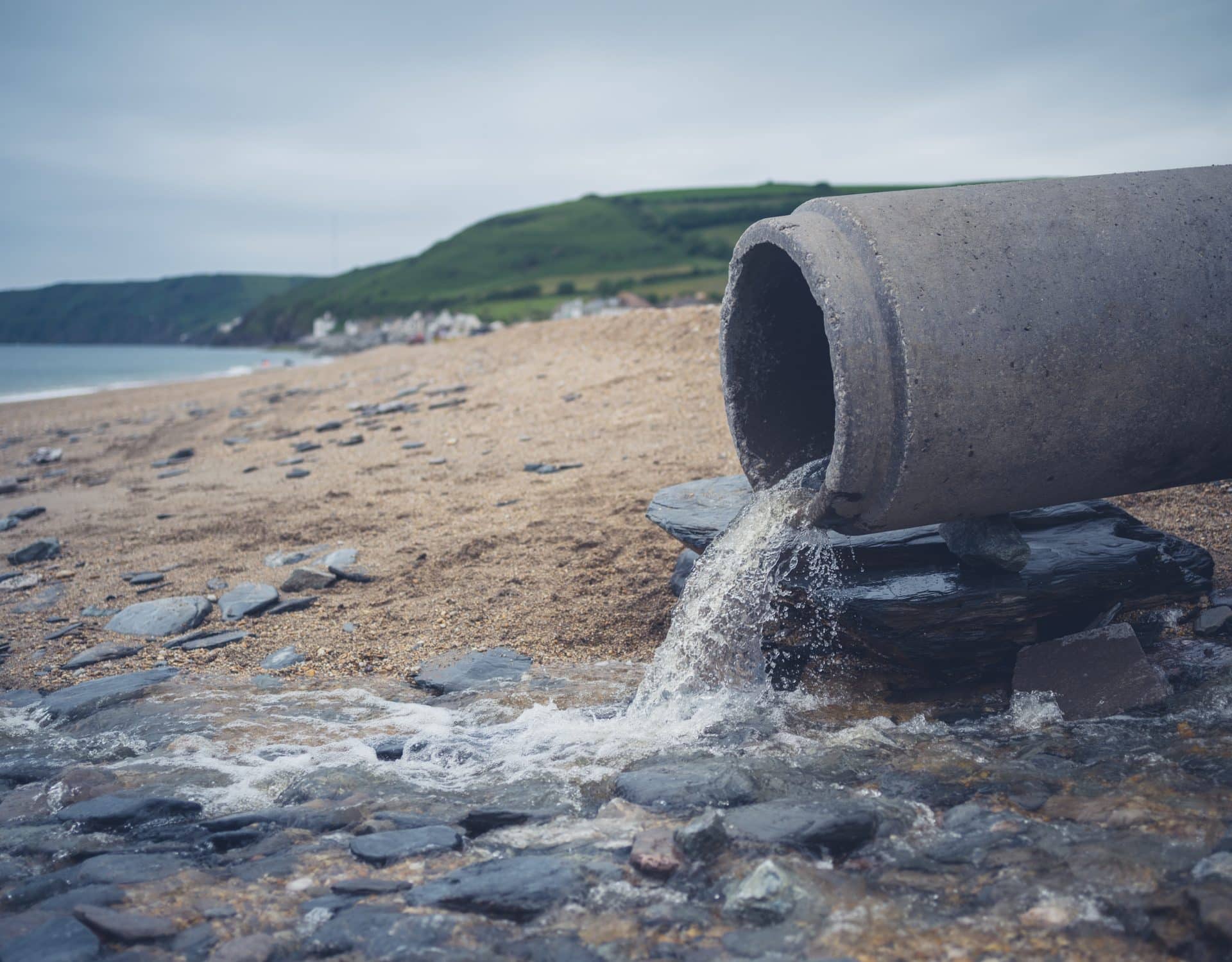

Conservationists have welcomed the Environment Secretary, Steve Reed’s, undertaking to halve sewage pollution to English rivers and coastlines in the next five years.
Reed undertook to abolish the economic regulator to the water industry, Ofwat, and to combine regulation in a single new agency following the 88 recommendations of a report by Sir John Cunliffe, who warned that bills would need to rise by 30 per cent in the next five years to pay for the changes required.
Reed promised that the new regulator would oversee the £104 billion of private sector required to rebuild the water network.
Some NGOs were still sceptical of the private sector solution chosen by the government with Surfers Against Sewage claiming it was “putting lipstick on a pig.” The campaigner Feargal Sharkey told BBC Radio 4’s Today programme that Reed should resign having presided over a 60 per cent increase in serious pollution incidents last year.
A snapshot of the problem is provided by Blue Marine Foundation’s Solent Seascape Project which has to deal with storm overflows and day to day discharges into the Solent or its catchment rivers.
Over the past two years, there have been almost 100,000 hours of storm overflow discharge into the Solent or its catchment rivers. The day-to-day discharges from the region’s sewage treatment plants are also substantial.
For example, a recent (2024) report by the Friends of the Itchen estimated that the Portswood plant in Southampton has an annual discharge volume of 7 million cubic metres, and that the E. Coli bacterial load from this was 34 times greater that the bacterial load from stormwater spills.
There are 36 sewage treatment plants along the rivers and shores which are attributed to the Solent region and its catchments. Many of the plants on the Solent are likely to be relatively high emitters of bacteria and nutrients and 32 of the region’s water treatment plants are considered to require urgent improvements (including Portswood).
This is in relation to nutrients; all 32 require improvements for nitrogen, but four plants also require works to reduce phosphorus emissions.
Louise MacCallum, Blue Marine’s Solent Project Manager, said: “I haven’t had a chance to read all of Sir John Cunliffe’s the 400+ page report, but as you can read in our recently published Solent State of Nature Report , poor water quality and in particular high nitrate levels are one of the worst anthropogenic factors negatively impacting marine nature in the Solent.
“Although sewage contains nitrates, if you look at source apportionment data, other inputs (agricultural run-off in particular) are much higher contributors.
“Sewage, however, also contains a myriad of other pollutants, including recreational and prescription drugs and various ‘forever chemicals’ which research is beginning to show can have high impacts on marine species.
“The opinion of Solent users of our water company (Southern) is hugely negative. There are regular protests. However, as a project, we believe we should work with them to help drive improvements. Southern were represented at our recent stakeholder engagement workshops (to help co-design our Seascape Recovery Plan), and in addition I sit on Southern Water’s Independent Climate and Environment Group along with other eNGOs and regulators.
“Speaking personally, I completely agree that mis-management within water companies and poor regulation of their activities is a national disgrace. Regulators (currently the Environment Agency) should be better resourced by government so that they can hold water companies properly to account.
“We think halving pollution in the next five years is a noble aim but it remains to be seen how it is going to be done. Even if we switched everything off today, there is a lot in the water already that is going to take years to remedy.”