Dear Friend of BLUE,
Over the last two months BLUE has celebrated a series of successes. The government announced proposals to ban bottom trawling and dredging on the Dogger Bank later this year, as well as the immediate protection of 300 square kilometres of Sussex seabed. Scotland’s largest no-take zone was also designated to protect critically endangered flapper skate.
Dogger Bank protected in ban on destructive fishing
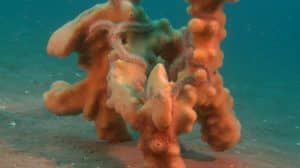
The government has announced a proposal to ban dredging and trawling in four of the UK’s offshore marine protected areas (MPAs) later this year. By far the largest of the four areas is Dogger Bank, a shallow sandbank in the North Sea, which BLUE has campaigned for the protection of since the release of a landmark report in September 2020.
The new measures to protect this area could lead to the recovery of the megafauna, such as angel sharks, European sturgeon and blue skate, that once thrived on the bank.
The enhanced protection of an additional 40 offshore MPAs in English waters has been promised by ministers within three years.
Over 300 kilometres of Sussex seabed and kelp protected from trawling
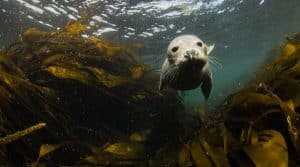
A new bylaw, supported by Sir David Attenborough and BLUE through the Help Our Kelp coalition, will protect 300 square kilometres of seabed off the Sussex coast from damaging trawl fishing. These new measures will help to restore Sussex’s remarkable kelp forests which will provide vital habitat for hundreds of species and sequester a large amount of carbon in the fight against climate change.
Critically endangered flapper skate egg nursery protected
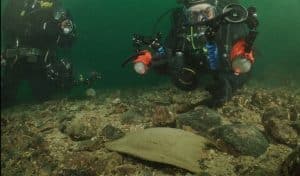
The recent campaigns, supported by BLUE, to protect the critically endangered flapper skate egg site near the Isle of Skye have been a success, with the Scottish government announcing an emergency marine protected area. The six square kilometre designation will become Scotland’s largest no-take zone, but falls short of advice from Nature Scotland who proposed closing a larger area.
IOTC fails to protect overfished yellowfin tuna
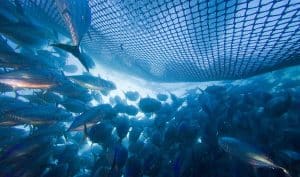
An emergency meeting of the Indian Ocean Tuna Commission (IOTC) was held in early March to address the ongoing overfishing of yellowfin tuna. BLUE strongly supported a proposal put forward by Maldives to significantly reduce catches of the globally important stock. Maldives’ proposal received significant coverage in the Guardian, as did Kenya’s proposal to better manage harmful drifting fish-aggregating-devices (FADs) in the region. Sadly, an unwillingness to compromise on the part of distant water fishing nations like the EU prevented agreement from being reached, but BLUE will redouble its efforts in advance of the next IOTC meeting in June. Read BLUE’s full statement here.
Trawling discovered to have massive climate change impact
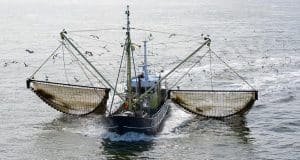
Bottom trawling has been found to release as much carbon dioxide as the entire aviation industry. The ground breaking study by Enric Sala and 25 scientists has challenged the contention that the fishing industry has one of the lowest carbon footprints of any form of food production, and is the first study to show the climate impacts of bottom trawling globally.
The Limit
The ‘Limit’ is a short documentary-film, produced by the Our Seas coalition, about restoring the threatened connection between communities and the life in Scotland’s seas. The Limit explores why we need to bring back Scotland’s inshore limit, which would prohibit destructive trawling close to shore. Please sign the #InShoreLimit petition to show your support.
The Ocean Awards 2021 finalists announced
In partnership with BOAT International, BLUE is delighted to present the Ocean Awards 2021 finalists. The high standard of entries this year gave the judges the unenviable task of narrowing down over 90 worthy candidates from around the world to just 23 finalists. The Ocean Awards winners will be announced on 5 May.
Government introduces new rules to protect grouper stocks
OLYMPUS DIGITAL CAMERA
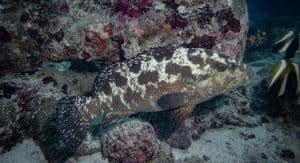
BLUE’s research in Maldives has resulted in the introduction of the Grouper Fishery Management Plan. These measures have been put in place by the Maldivian government to address the decline of wild grouper, a coral reef fish vital for reef health.
Being a female marine conservationist in Maldives
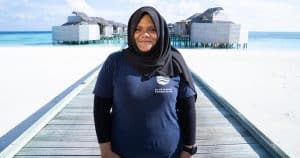
Naff Asim, BLUE’s Resort Research and Fisheries Officer, gives a personal account of her experience pursuing a career in marine conservation as a woman in Maldives.
England’s first native oyster restoration hatchery opens in the Solent
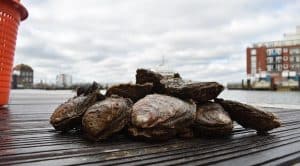
England’s first oyster restoration hatchery in Langstone Harbour, Hampshire, will produce millions of native oysters to be introduced into the Solent. The hatchery, opened by the University of Portsmouth and BLUE, will support BLUE’s work in the Solent to restore the native oyster, foster biodiversity and help reduce pollution.
Managing crab and lobster catches could offer long-term benefits
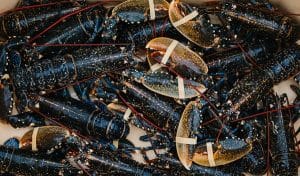
Plymouth University have published research, supported by BLUE and carried out at the Lyme Bay Reserve, which provides a guide for sustainable pot fishing within the UK’s marine protected areas. The study found that managing the density of crab and lobster pots at an optimum level increases the quality of catch, benefits the marine environment and makes the industry more sustainable in the long term. You can watch a video about BLUE’s work in Lyme Bay here.
Jasmine Harrison becomes youngest woman to row Atlantic solo

On 20 February, 21 year old Jasmine Harrison, completed her 3,000 mile row across the Atlantic in a time of 70 days, 3 hours and 48 minutes, becoming the youngest woman to row the Atlantic solo. Her brave, record breaking journey has now raised an astonishing £19,695 for BLUE and ShelterBox. Please click here to donate.
Oceanographic magazine
As a thank you for supporting marine conservation, Oceanographic is giving BLUE subscribers free access to their fantastic magazine using this link. They are also delighted to offer BLUE’s community ten per cent off annual print subscriptions using coupon code BLUE10.