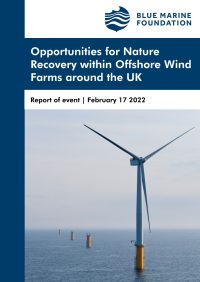
Reaching net zero and enhancing biodiversity are crucial policy goals closely tied to offshore wind farm development. Achieving these objectives requires effective collaboration among government bodies, offshore wind developers, marine users, and scientists. However, challenges such as costs, the risks associated with new technologies, regulatory barriers, and engaging diverse stakeholders must be addressed. Insights from marine spatial planning and collaborative projects in the Netherlands offer valuable lessons for the UK, highlighting the need to establish a similar supporting framework. Successful pilot projects in the Netherlands, including nature-inclusive designs like habitat creation and species reintroductions, demonstrate the potential for positive outcomes. Stakeholders are also developing tools to support nature recovery in offshore wind farms, such as decision support tools and policy guides for multi-use projects. While offshore wind farms can have both positive and negative effects on biodiversity, these outcomes depend largely on the integration of nature-inclusive designs. As marine spaces become increasingly crowded, innovative solutions—such as compensation measures or artificial habitats—are crucial for balancing biodiversity conservation with development goals.
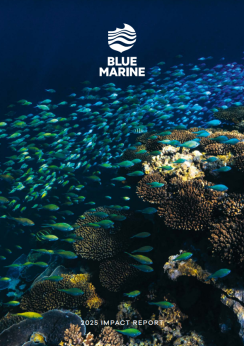

Impact Report 2025
Blue Marine drives global ocean recovery by advancing marine protection, restoring habitats, influencing policy, supporting communities and tackling overfishing, with measurable impact across 29 countries and 446,620 sq km of ocean.
27 February 2026