NEWS, London, 25 JULY 2025: In a landmark ruling, the General Court of the European Court of Justice has sided with environmental NGOs in their challenge against the European Commission, marking a major step forward for environmental justice and ocean protection. In February 2025, Blue Marine and Bloom Association challenged the EU’s decision to block fisheries management measures aimed at protecting Indian Ocean tuna stocks from the harmful impacts of drifting fish aggregating devices (FADs).
This result means that the European Commission will have to review its decision to block a crucial fisheries management measure aimed at protecting Indian Ocean tuna stocks from the impacts of this destructive fishing method.
The case also has a wider impact for NGOs seeking access to justice, highlighting the importance of being able to hold the EU institutions to account when they fail to follow their own laws.
Ocean conservation charity, Blue Marine Foundation, is renewing its call for retailers to stop selling tuna caught using drifting FADs.
Blue Marine’s initial report, The UK’s Tuna Blind Spot, exposed the widespread use of controversial drifting FADs in supermarket supply chains in 2023. Today, most of the UK’s top 10 retailers still sell tuna caught using this destructive fishing method.
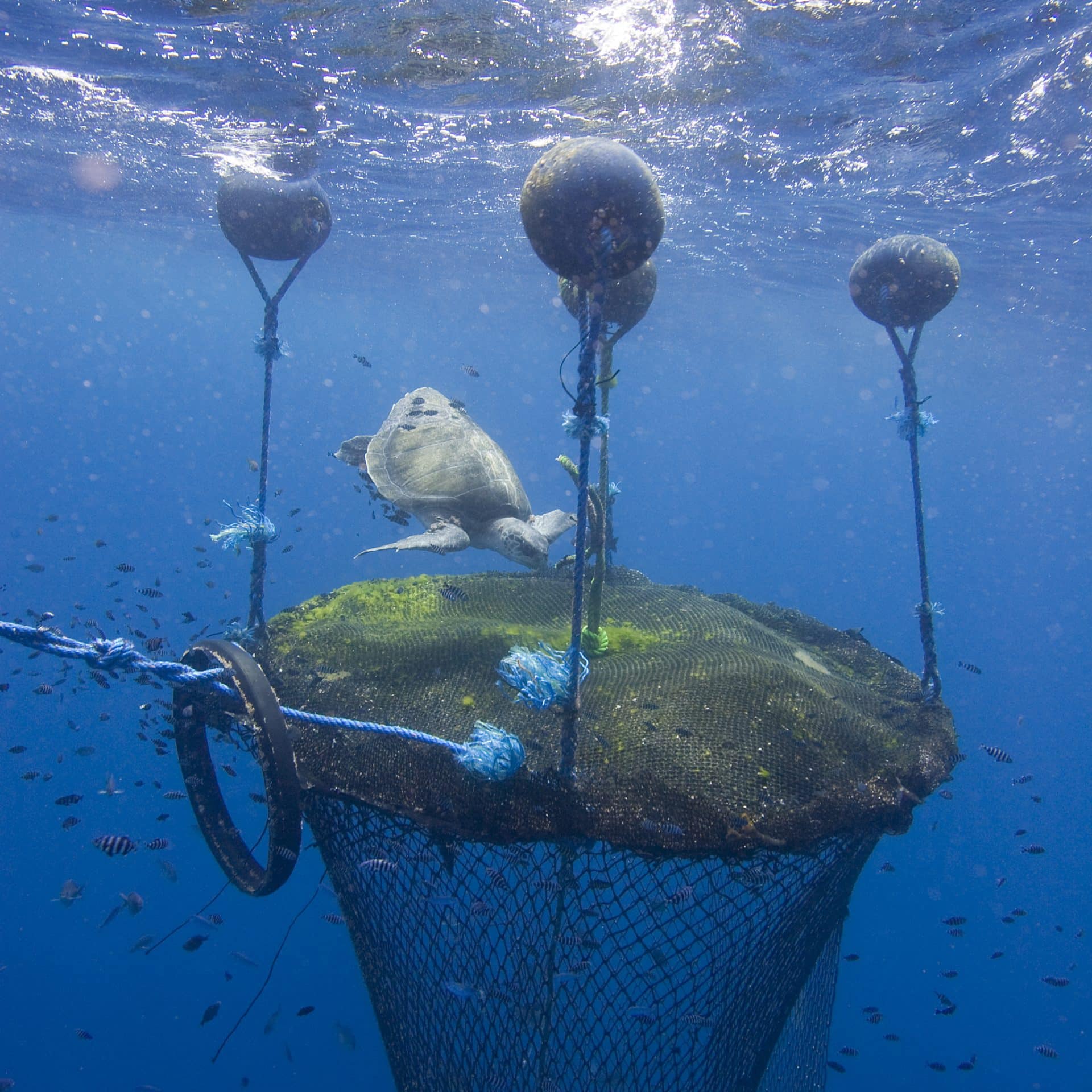
Drifting FADs are floating fishing devices that draw large schools of tuna, but they are heavily criticised for capturing juvenile fish before they have had the opportunity to breed. A recent paper by Dalhousie University estimates that 1.41 million drifting FADs were released between 2007 and 2021, drifting across at least 134 million square kilometres, or 37% of Earth’s ocean surface.
Their use contributes to overfishing and has been linked to bycatch, ghost-fishing, plastic pollution, and the decline of tropical tuna stocks in the Indian Ocean. Despite this, UK supermarkets continue to sell canned tuna sourced through these methods.
Legal battle for stronger ocean protection
This decision is the culmination of a long-fought legal battle between ocean conservation NGOs and the European Commission.
In February 2025, Blue Marine and Bloom Association challenged the EU’s refusal to review its decision to block a crucial fisheries management measure aimed at protecting Indian Ocean tuna stocks from the harmful impacts of drifting FADs.
This followed the EU’s objection to the environmental resolution, which was led by Indian Ocean coastal states and adopted by the Indian Ocean Tuna Commission in February 2023.
The result states that the EU ‘actively blocked’ measures for stronger protection of certain fish stocks, preventing these from being implemented in its own legal framework. The Court further stated that the decision of the EU must be open to legal scrutiny, as it could undermine EU law, in particular, the EU’s environmental policy objectives, which include the ‘prudent and rational utilisation of natural resources’ and ‘promoting measures at the international level to deal with regional or worldwide environmental problems’.
Priyal Bunwaree, Senior Legal Counsel at Blue Marine Foundation said: “We have succeeded in ensuring that a decision which impacts the health of distant waters can no longer escape legal scrutiny. This judgment has implications that reach well beyond marine protection; it marks a significant step forward for access to justice in environmental matters.”
The great supermarket sustainability scam
Blue Marine’s research found that, while many supermarkets have banned drifting FAD-caught canned tuna in their own-label ranges, they continue to sell brand-name canned tuna caught using the same destructive methods in 2025.
Despite public commitments to sustainable seafood policies, most UK supermarkets were found to be selling brand-named tuna like John West (owned by Thai Union) and Princes (owned by the Mitsubishi Corporation), which source tuna from fleets that use drifting FADs in the Indian Ocean.
In 2021, a spokesperson for J Sainsbury plc told the Guardian newspaper that none of its tuna is caught using FADs. However, Blue Marine’s investigation found evidence that the retailer continues to sell brand-name canned tuna caught using these destructive devices in 2025, raising concerns about greenwashing.
Meanwhile, in 2023, several other retailers, including Waitrose* and Tesco**, referenced the Marine Stewardship Council (MSC) in their own-label sourcing policy to the Press Association.
However, far from guaranteeing the absence of drifting FADs, MSC certification is frequently awarded to tuna fisheries that use drifting FADs, despite objections from Blue Marine and other NGOs. A report from the environmental group, Bloom Association, found that more than half of the tuna certified as “sustainable” by the MSC comes from fisheries that rely on FADs.
Jess Rattle, Head of Investigations at Blue Marine Foundation said: “The court says the Commission should review its decision to object to measures ‘aimed at the greater protection of fish stocks’ which included an important 72-day ban on drifting FADs in the Indian Ocean. Retailers should be aware of this, and of the fact that the EU-owned purse seine fleet alone catches 30% of the region’s tuna and does so using these destructive devices, with this tuna making its way onto our shelves.
“UK supermarkets have been well aware of the harm caused by drifting FADs for years, evidenced by the fact that many have made public commitments to ban them in their own-label tuna. Yet, despite these promises, they continue to sell brand-name tuna caught using the same destructive methods.
“UK consumers are being misled by supermarket sustainability claims.”
M&S – a UK retailer refusing to source from drifting FADs
In 2023, Blue Marine and Bloom Association urged UK retailers to stop selling tropical tuna caught around drifting FADs. They called for this policy to cover both own-label and brand-name tuna products, delivering the message to all ten major UK retailers in August 2023.
Marks & Spencer emerged as the only supermarket in the UK which ensures that all of its canned tuna is sourced without using drifting FADs.
Steve McLean, Head of Agriculture and Fisheries at M&S Food said: “At M&S, we are an own brand retailer and making sure all our products are high quality really matters to us. This means great tasting food, which is made and sourced with care. That’s why all the tuna found in our products is line caught and we don’t allow the use of drifting man-made structures, also known as FADs. It’s part of our Forever Fish policy that aims to protect the marine environment. It’s another reason why our customers can trust that M&S is doing the right thing.’’
Consumer frustration over misleading claimsA new poll by the ocean conservation charity uncovers consumer sentiment around shopping for fish products such as tuna.
The study found that three-in-five people in the UK (59%) would not buy fish if they knew it was sourced unsustainably. The leading barriers preventing people from choosing responsibly sourced seafood are cost (48%), a lack of information (39%), and difficulty in identifying what is sustainable (31%). Nearly one-in-five (17%) say they have no trust in seafood labelling – a significant consumer challenge.
Additionally, consumers express frustration over misleading sustainability claims by supermarkets:
“I always assumed that if a supermarket said their tuna was sustainably sourced, it meant all their tuna, not just their own-label products,” said Ned Matthews, 23, from Eastbourne. “It’s frustrating to find out that I might have been buying tuna caught with these horrible devices without knowing it. I want to do the right thing, but it shouldn’t be this hard to make an ethical choice at the supermarket.”
“If M&S can commit to truly sustainable tuna, why can’t the others?” asked Hannah Jowitt, 31, from Manchester. “It feels like they’re cutting corners at the expense of the environment, and hoping no one will notice. These brands talk a big game about sustainability, but then sell products that contradict that. It makes it hard to trust anything they say.”
Blue Marine is calling on UK retailers to stop selling tuna caught using drifting FADs by not entering into any new supply agreements for tuna caught in this way.
“Until supermarkets take action, British consumers continue to unknowingly buy tuna caught using unsustainable and harmful fishing practices,” says Rattle.
Blue Marine Chief Executive Officer, Clare Brook, said: “This is a significant battle won in the long war against mindlessly destructive overfishing. By emptying the ocean of fish, we are depriving some of the poorest people in the world of their food and their future. The EU has been surprisingly culpable in this and it needs to address its approach, as do the retailers.”