We are running out of time to save the ocean, but not because we lack agreements. Through the hard work of many, we now have all the frameworks we need.
At the UN’s COP30 climate conference in November, Brazil included the ocean in its Nationally Determined Contribution (NDC). Six more countries followed, bringing the total to 61. Leaders launched a Blue Package roadmap to accelerate ocean climate solutions by 2028.
These latest developments build on a decade of unprecedented ocean commitments — from protecting 30% of the sea by 2030 under the Global Biodiversity Framework, to blocking illegally caught fish at port through the Port State Measures Agreement (PSMA), to governing “High Seas MPAs” under the new treaty on Biodiversity Beyond National Jurisdiction (BBNJ).
The ambition has been extraordinary. But we’re not done. We now need a different kind of ambition.
Sustaining the ocean requires three things: First, we need frameworks and agreements such as PSMA and BBNJ that establish jurisdictional authority. Next, we need specific protections under those frameworks, such as designated marine protected areas (MPAs), with regulations that must be followed. Finally, we need enforcement of those protections to make them real.
Critically, we cannot wait to create new protections before we start worrying about how we will enforce them. Enforcement capacity-building must start happening now, so that we are already prepared as future protections come online.
This is because while negotiators draft new commitments, coral reefs continue collapsing, oxygen keeps vanishing from the deep sea, and illegal fishing fleets operate with impunity. The Global Tipping Points Report warns that key marine systems are approaching irreversible thresholds, even under the most optimistic scenarios.
The truth is that policy ambition and regulatory protections alone cannot protect the ocean. In too many places, commitments exist without the means to make them real. Making them real requires meaningful enforcement. But enforcement is rarely discussed because it is technically complex, politically uncomfortable, and unglamorous. Yet it is the primary determinant of whether our collective promises will deliver anything at all. We cannot wait for the protections to be in place before building enforcement capacity.
Building the capability to make commitments credible
Every major ocean commitment depends on this simple condition: that nations can ensure their rules are followed. Without capable enforcement, marine protected areas (MPAs) are mere lines on a map; they are invisible verging on non-existent out at sea. Without inspection capacity, PSMA is a hollow aspiration. Without monitoring and compliance, BBNJ will create sanctuaries that exist only on paper or computer screens.
To close this gap, nations need ways to build, strengthen, and operationalise their enforcement capability — as ever, doing more (and doing so more effectively) with finite resources of people, time, and budget.
This is neither an all-or-nothing nor overnight transition. Countries can incrementally scale up their enforcement efforts by starting with what’s right under their proverbial noses (e.g., seafood imports into their ports and markets) and progressing to the hardest to logistically tackle (e.g., High Seas MPAs farther from easier oversight). That progression could look like the following:
- Starting at the port. The PSMA empowers nations and other authorities to risk-assess vessels before entry and deny access to those linked to illegal activity. This offers the most direct way to choke off the global trade in illegally caught fish while creating the intelligence base for wider maritime compliance.
- Extending to domestic waters. Following seafood imports, nations can next bring domestic fleets under the same standards of transparency and control, building confidence that national waters are governed fairly, that enforcement decisions are evidence-based, and that MPAs in their territorial waters and exclusive economic zone are truly protected.
- Scaling across international waters through regional cooperation. As nations build capability, shared data and joint operations can turn enforcement from an isolated struggle into a collective deterrent. This will be especially important for the governance of High Seas MPAs under the BBNJ Treaty in places such as the Caribbean, the Western Pacific, the South Atlantic, and the Indian Ocean, where small states and the far-flung outposts of larger nations can pool their strength.
The pathway is clear. What’s needed now is the will to act.
The ocean’s defenders need support
The people and agencies already out there defending our ocean face those vast waters with limited time and resources against well-resourced criminal networks (sometimes explicitly or implicitly “sponsored” by colluding nation-state actors). These ocean defenders are up against big challenges in what can feel like a David-versus-Goliath battle of long odds. It’s no surprise they are falling behind. But with the right intelligence and right enforcement practices, they can increase efficiency and effectiveness and catch up. They — and the ocean — can win.
The nonprofit that I lead, OceanMind, has seen and experienced what it takes to achieve this success. We have helped nations in Southeast Asia implement the PSMA with increasing effectiveness. We have helped authorities from Oceania to the European continent to Africa to North America manage their MPAs. Perhaps most importantly, we are the only non-governmental organisation that is actively supporting the enforcement of over 4.5 million km2 of large-scale, remote marine protected areas with many of the same characteristics of High Seas MPAs.
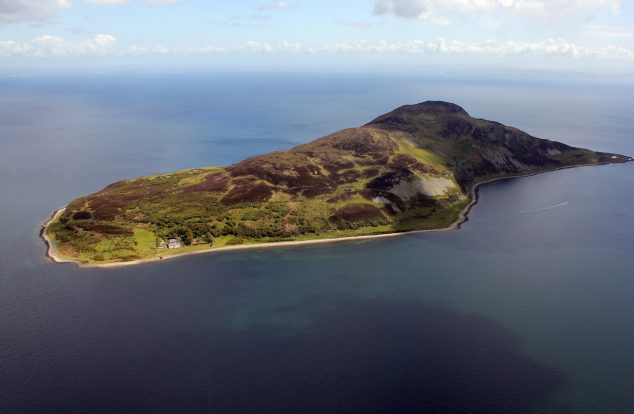
For example, for years we have helped the UK government monitor and enforce MPAs around Tristan da Cunha, a British Overseas Territory (BOT) in the South Atlantic that has the distinction of being the world’s most remote inhabited archipelago.
More recently, we have studied Walvis Ridge, a potential High Seas MPA amidst a remarkable marine ecosystem running some 3,000 km, from off the coast of Namibia southwest to Tristan. It is an environment rich with sea life, yet our initial analysis suggests that fishing and transshipment is primarily sending the Walvis Ridge’s fish to markets in East Asia.
If a Walvis Ridge High Seas MPA is to happen – it needs a coastal state champion who understand the benefits, not just to the deep ocean biodiversity but to the surrounding biodiversity, and therefore the economy and livelihoods, within their own national jurisdiction. To realise these benefits though, and making it truly real, will require the types of enforcement capacity we’ve helped build in Tristan and elsewhere around the world.
Time is a resource the ocean no longer has. The early 2030s — the same period in which the world has pledged to deliver 30×30 — are also the period in which several marine systems may pass irreversible tipping points. Unless countries are ready to enforce effectively before those thresholds are passed, even perfect policies will be too late to matter.
The next five years will decide whether our treaties become milestones of progress or monuments to lost opportunity. The ocean cannot wait for another round of promises; it needs the means to uphold the ones we have already made. Meaningful enforcement in the years just ahead must be much more than rose-colored ambition; it must be our shared achievement.
Nick Wise is founder and CEO of OceanMind.